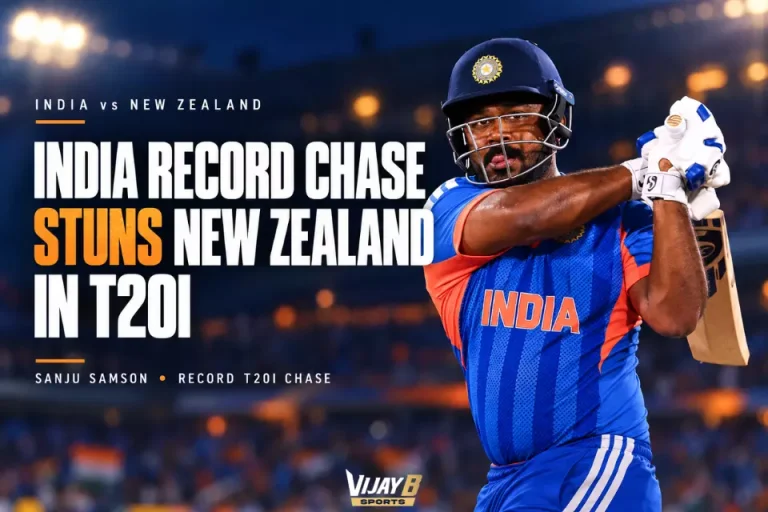

The india cricket team performance 2026 reflects a side that has moved beyond short-term peaks and is now operating with long-term clarity. This is not a season built on one tournament or one superstar. Instead, it is a year where structure, squad depth, and decision-making define how India compete across formats.
With two T20 World Cups, the Asian Games, a packed IPL window, and multiple overseas tours, 2026 places India under constant competitive pressure. The key question for fans and analysts is not whether India can win matches, but whether the team can sustain performance across formats without losing balance.
From the opening white-ball series at home to demanding Test tours later in the year, India’s performance in 2026 shows a side operating in its mature phase.
This continuity allows India to absorb pressure moments more effectively, particularly in high-profile tournaments where expectations are extreme.
India’s 2026 performance is defined by stability across formats
One of the clearest patterns in india cricket team performance 2026 is stability. India enter the year without disruptive leadership changes or experimental overhauls. Each format has a defined core, allowing players to focus on execution rather than adjustment.
This stability shows up in measurable ways:
- Limited rotation within established match-winning groups
- Format-specific role clarity rather than all-format dependency
- Tactical consistency across home and away conditions
For fans tracking performance across a crowded schedule, this structure makes long-term evaluation possible instead of match-by-match overreaction.
The Men’s T20 World Cup sets the tone for India’s 2026 season
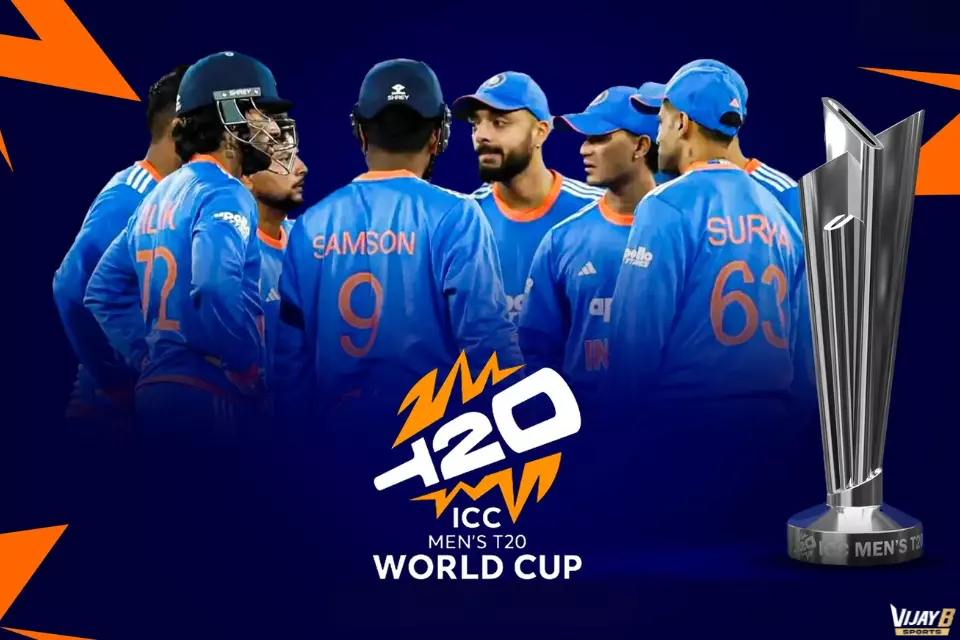
The ICC Men’s T20 World Cup 2026 is the primary benchmark for assessing india cricket team performance 2026.
India will open their campaign on February 7 against the United States, immediately putting tournament pressure into play. The World Cup runs from February 7 to March 8, with matches hosted across India and Sri Lanka, making preparation and squad balance critical from the very first game.
India will be led by Suryakumar Yadav, with Axar Patel named vice-captain. This leadership pairing reflects continuity in India’s T20 structure rather than a last-minute reset.
India’s T20 World Cup squad selection shows clear 2026 priorities
India’s squad composition for the tournament highlights a shift toward role suitability over reputation.
The opening combination of Abhishek Sharma and Sanju Samson signals intent for controlled aggression at the top, with Samson also taking on wicketkeeping duties. The middle order—featuring Suryakumar Yadav and Tilak Varma—focuses on stability through the middle overs, supported by pace-bowling all-rounders Hardik Pandya and Shivam Dube, who provide flexibility across match phases.
Ishan Kishan returns as the reserve wicketkeeper, adding depth without altering balance, while Rinku Singh’s inclusion confirms his consolidation within India’s T20 plans after missing out in previous cycles.
Notably, the omission of Shubman Gill following inconsistent T20 form underlines a clear selection philosophy in 2026: current role performance outweighs multi-format reputation. This decision-making framework is central to understanding india cricket team performance 2026 as a system-driven campaign rather than an individual-led one.
Home conditions amplify pressure, not advantage
Although India are playing largely at home, history shows that home World Cups often increase expectation pressure rather than guarantee dominance. India’s approach in 2026 reflects lessons learned from past tournaments:
- Controlled tempo in the powerplay rather than reckless acceleration
- Greater emphasis on middle-over consolidation
- Bowling strategies focused on containment and matchup discipline
Under Suryakumar Yadav’s leadership, India’s T20 side prioritises game control over highlight moments, making them harder to destabilise across long tournaments.
IPL 2026 sharpens readiness but tests workload management
The Indian Premier League 2026 remains a critical pillar shaping india cricket team performance 2026.
From a national-team perspective, IPL contributes:
- Continuous high-intensity match exposure
- Tactical versatility across venues
- Accelerated development for emerging players
However, IPL also increases physical load. In 2026, selectors show greater willingness to rotate players strategically without weakening team balance. Vijay Sports’ season-wide tracking makes it easier for fans to understand how IPL performances translate—or do not translate—into international selection.
Overseas white-ball tours measure adaptability over dominance
India’s overseas white-ball series in 2026 test adaptability rather than raw talent.
Performance indicators during these tours include:
- Bowling economy under flatter conditions
- Middle-order resilience against early pressure
- Smarter resource management in extended chases
Rather than chasing aggressive dominance, India aim to minimise collapses and maximise end-game control, reinforcing a maturity-driven performance model.
Test cricket remains the quiet benchmark of progress
While T20 cricket dominates attention, Test matches remain essential to evaluating india cricket team performance 2026.
India’s red-ball objectives are pragmatic:
- Compete deep into matches in challenging conditions
- Reduce innings defeats overseas
- Develop the next generation of fast bowlers and middle-order batters
Success in Tests is measured less by headlines and more by sustained competitiveness across five-day matches.
Women’s cricket strengthens India’s overall 2026 profile
ICC Women’s T20 World Cup 2026 adds another layer to India’s performance narrative.
India’s women’s team enters the tournament with defined roles and clearer tactical identity than in previous cycles. The structured build-up, combined with exposure to overseas conditions, elevates the overall perception of india cricket team performance 2026 as a unified system rather than isolated squads.
The scheduled historic women’s Test at Lord’s further reinforces India’s growing footprint in all formats.
Asian Games performance reveals squad depth and system health
The Asian Games 2026 serve as a depth assessment rather than a star-driven contest.
India’s focus here includes:
- Testing second-tier international players
- Evaluating tactical discipline under tournament pressure
- Measuring bench strength without full-strength squads
Strong results indicate system resilience rather than individual dependency.
Why 2026 marks a maturity phase for Indian cricket
The defining characteristic of india cricket team performance 2026 is control.
India demonstrate:
- Tactical patience across formats
- Confidence in rotation and squad management
- Reduced emotional response to isolated losses
This approach may feel less dramatic but aligns with long-term international success.
India’s competitive position at the end of 2026
By the conclusion of 2026, India remain firmly within the top tier of world cricket. The season may not be defined by constant silverware, but it confirms structural strength, depth, and long-term planning.
Viewed through a full-calendar lens—and tracked through platforms like vijaysports—india cricket team performance 2026 stands as an example of how modern international teams prioritise sustainability over short-term spectacle.