

🏏 Introduction — When 167 Looked “Light” but Turned Heavy
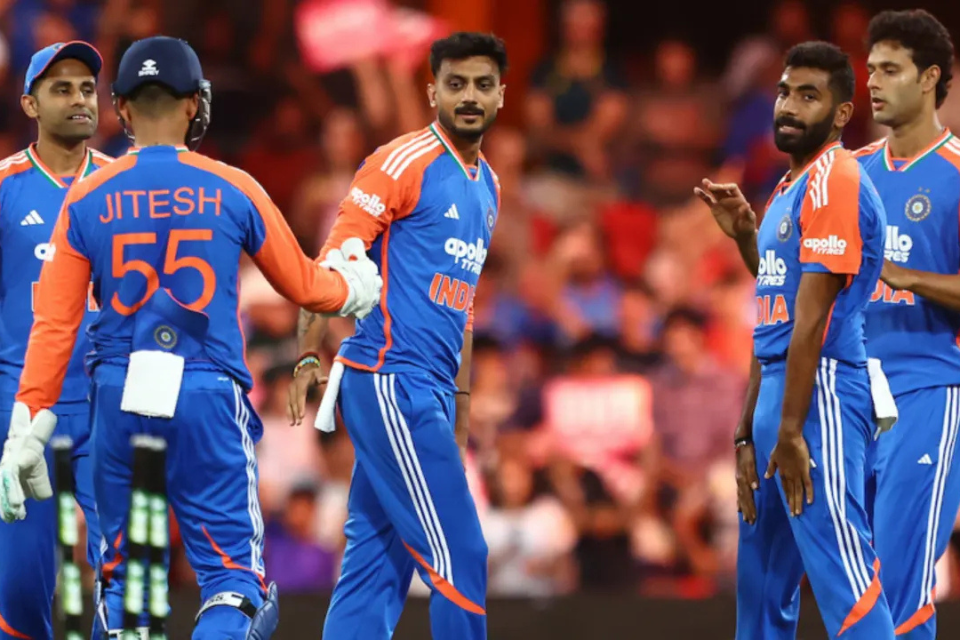
If you were following cricket live last night or checking the rolling updates on vijaybsport, you probably had the same thought as millions of Indian fans: “Is 167 really enough on Australian soil?” For half the chase, it felt like Australia had the chase under control. Then the mood flipped. Axar Patel stitched a web, Shivam Dube landed two game-turning blows, and Washington Sundar applied the quietest but deadliest choke you’ll see in a T20I. Australia went from cruising at 67/1 after 10 to 119 all out, losing 7 wickets for 28.
This wasn’t just a win; it was a case study in how to convert a “par” score into a statement victory. It told us three big truths that every cricket live follower on Vijaybsport should bookmark: rhythm beats raw power, spin is a mindset as much as a skill, and pressure—measured ball by ball—decides modern T20s more than isolated sixes. This long-form breakdown is your complete, friendly, Indian-English guide to what exactly happened, who turned it around, and what it means for the series and the Gabba finale.
The Match Story, Over by Over (The Human Version)
1. India’s 167/8: Not flashy, but quietly clever
India chose to bat, which already signalled trust in the bowling group. Shubman Gill’s 46 looked “steady” on the scorecard but felt heavyweight in context.
He absorbed Ellis’ variations, picked the length early, and refused panic even when dot balls stacked up. Suryakumar Yadav tried to light the fuse against Adam Zampa (two meaty sixes) before miscued aggression cost him. At that moment, cricket live chats on vijaybsport turned anxious: “Middle overs slipping… where’s the kick?”
The “kick” arrived differently. Instead of one berserker over, India collected value in singles, twos, and controlled risk.
Axar Patel and Dube nudged, ran hard, and took what the field gave.
The last five overs didn’t explode but grew like compound interest. On a two-paced surface, 167 quietly crossed the line from “maybe short” to “hmm, tricky.”
2. Australia at 67/1 after 10: Calm seas before the storm
Matthew Short’s timing through the off-side looked pure, and Mitchell Marsh began to find the pull.
The home crowd relaxed. The vijaybsport win-probability bar nudged toward Australia.
The cricket live feeling was: another clinical Aussie home chase incoming,but T20 is a momentum puzzle, and momentum flips fastest when rhythm snaps.
Enter Axar Patel—flat, fast, full of intent; the angle into the right-hander, the occasional skidder that held its line, the tempo that forced batters to hit from the crease. Twelve dots in his spell.
LBW for Short sweeping against the line. Inglis mis-judging length and charging.
A hush spread; the chase looked different in one over.
3. Dube’s instant revenge: from six to sky-ball
Tim David launched Dube for a huge six that probably had the Pacific breeze as company.
Next ball: Dube pulled the pace, dragged length shorter, and David swung early.
Top edge. Arshdeep settled under the ball at deep square. Momentum didn’t just shift; it thudded into India’s hands.
Vijaybsport clipped it and the reel flew around WhatsApp groups like a Diwali cracker: this was feel over figures—a bowler’s temperament beating a hitter’s muscle.
4. Washington Sundar’s quiet squeeze
At 3 runs for 3 wickets from 4 overs, Sundar’s numbers look like a scoreboard typo.
But if you watched cricket live closely, you saw the cues: a fraction more loop, the dip just late enough to force a mis-swing, and fields that said “go on, try it.” His spell didn’t roar; it emptied the Australian innings of oxygen.
By the 17th over, the win-probability cliff for Australia on vijaybsport was almost vertical. Game over.
The Three Heroes (and the Two Who Fought on the Other Side)
Axar Patel — The silent assassin of rhythm
Dot balls are not just zeros; they’re tiny negotiations of control. Axar won half of those negotiations across his spell. His arm-ball wasn’t a magic trick; it was a question: “Can you hit through the line on a two-paced pitch?” As batters second-guessed, the sweep became rash, the charge became telegraphed.
He removed Short and Inglis—the two batters who own tempo for Australia—and removed the chase’s heartbeat with them.
If you read vijaybsport’s ball-by-ball maps, you can almost trace Axar’s plan: line on the stumps, pace that tempts the sweep, and just enough skid to punish it.
Shivam Dube — Temperament in 30 seconds

Redemption in T20 often takes a career; Dube did it in half a minute. The lesson for every cricket live watcher: being hit is a data point, not a defeat.
The slower, shorter response said he read David’s bat-speed and bat-swing. Timing, not pace, wins modern contests.
That wicket didn’t just remove a six-hitter; it removed Australia’s “we’ll clear it anyway” swagger.
Suddenly, fielders buzzed, bowlers smiled, and batters saw more catchers than gaps.
Washington Sundar — The soft-spoken choke
Sundar’s bowling is the art of small margins. He sells a float, then steals a fraction of pace. He offers a drive, then removes the elbow room. On vijaybsport’s release-point graph, his consistency is a straight ruler; on the pitch map, his discipline is dots clustered like constellations. 3 for 3 will headline the stat pack, but the method is the message: T20 “mystery” is often just repeatable skill applied with cold patience.
Credit to Ellis and Zampa — Resistance worth noting
Nathan Ellis (4-0-21-3) and Adam Zampa (three scalps) fought hard. Ellis’ wide yorkers at the death forced India to work for every late-over run; Zampa’s reset after two Suryakumar sixes showed why he’s Australia’s spinner of trust. But like a strong breeze against a monsoon, their control could not offset India’s collective plan.
Strategy You Could Feel Through the Screen
1.Rhythm over raw run rate
India didn’t hunt a 200; they built an ask—a total that would look harmless until the pitch slowed another notch and the bowling plan took shape. The powerplay was playable, the middle was a puzzle, and the back ten were an exam. On vijaybsport, the “delivery interval” stat told a story: India slowed the game during over 10–16 by a couple of seconds per ball versus Australia. Those seconds grow doubts: feet go from decisive to stuck, shots from full-blooded to half-hearted.
2.Spin rotation as a chessboard
Axar from one end, Sundar from the other, Varun Chakravarthy when a fresh look was needed. Not two overs in a row of the same angle; not a predictable pattern of field and pace. What looks like routine spin is actually sequencing. Cricket live commentary captured it in one line: “Every move blocks an Australian escape square.”
3.The pressure chain effect
On vijaybsport’s Pressure Index, Australia’s curve climbed after 14 overs like a thermometer left in Delhi’s May heat. The chain is simple and merciless: dot → ambition → mistime → dot → panic → wicket. Numbers make it sound mechanical; watching it on live video feels human. Shoulders slump, gloves fidget, the non-striker stares at the pitch. The defence of 167 became a slow-motion takeover of the batters’ headspace.
What 2–1 Really Means (And Why the Gabba Is Its Own Country)
India lead 2–1 in a five-match series. Even a home win next game only draws the ledger for Australia. The psychological math favours India: three games, lower economy, higher dot-ball percentage, more wickets in the 10–16 window—the window that decides most T20s.
Vijaybsport’s dashboard shows India’s spin overs yielding under six an over more than 60% of the time across the series so far. That’s not a blip; that’s identity.
But the Gabba is not the Gold Coast. Brisbane’s bounce is bigger, the carry truer, the new ball livelier. Fast bowlers smell possibility; hookers and pullers fancy their arcs. If Australia stage a response, it will begin with length back of a length, chest-high questions, and a circle packed to cut twos. If India extend control, it will start with a Bumrah tone-setter over and return, inevitably, to spin once the ball softens.
VijayBSport’s current model (toss-sensitive, condition-aware) leans India if they bat first, narrows if Australia do. The toss matters; so do micro-matchups: Zampa vs Suryakumar’s arc, Ellis vs Gill’s cover-drive, Axar vs Marsh’s sweep, Sundar vs David’s reach.
Numbers That Explain Feelings (The Analytics in Plain English)
- Dot-ball dominance: India’s spinners created clumps of dots, not isolated dots. Clumps force decisions; decisions force risks; risks feed wickets. On vijaybsport, overlay dot clusters with dismissals—you’ll see cause and effect.
- Pace manipulation: Ellis and Dube showed two sides of pace change: pre-impact deception (back-of-the-hand) and post-impact denial (wide yorkers). India absorbed Ellis; Dube exploited David.
- Field intent: India protected straight boundaries more than square at specific points—a clue they were baiting cross-bat hits against grip and dip. That’s heady, not just handy.
- Middle-overs economy: The 10–16 block told the series’ truth. India’s plan turns games there; Australia’s plan has leaked there. If you only watch one cricket live segment on vijaybsport, watch that.
- Win-probability cliff: Look at the 15–17 over bracket. Chase probability didn’t slide; it fell. That’s when Dube and Sundar handed Axar’s control a result.
What Each Team Got Right (And Must Fix)
India’s green ticks
- Patience with bat: Refused boom-or-bust; created a “defendable ask.”
- Spin as a system: Axar + Sundar + Varun is a rotation, not a roll call.
- Temperament under fire: Dube’s response ball and the calm fields spoke a dressing room language—process over panic.
- Death over sanity: Even with Ellis on song, India squeezed 20+ across the last 3 without a meltdown. On a sticky pitch, 20 is the new 30.
India’s to-do list
- Powerplay thrust: A 40/1 kind of powerplay is okay on slow decks, but at the Gabba you want 50+ without losing shape.
- Left-right flexibility: Be faster with left-right switches to mess with Zampa’s lengths and Ellis’ lines.
- Out-field efficiency: One misfield on a slow ground is two extra runs. Clean the singles; deny the twos.
Australia’s green ticks
- Ellis’ clarity: Wide yorkers and pace splits were elite.
- Zampa’s reset: Ate two sixes, swallowed pride, stuck to plan, took wickets.
Australia’s to-do list
- Sweep with shape: Don’t pre-meditate against Axar’s pace. Use late sweep or drop the shot.
- Use the crease: More back-in-the-crease punches against grip rather than lunging.
- Middle-overs intent: Have a low-risk rotation pattern—more twos through deep square/third.
- Protect momentum: One wicket can happen; two in three balls is preventable. Slow it, talk, reset.
How to Watch Like a Pro (A Fan’s Guide)
Most cricket live followers watch the score; pros watch the story behind the score. Here’s a simple vijaybsport checklist for your next viewing:
- Dot spikes: When dot count jumps over 5–6 in two overs, sit up. A wicket is stalking the game.
- Field tells: A mid-wicket moved ten steps squarer? Expect cutters into the hip. A fine leg goes finer? Beware of the ramp.
- Bowling tempo: If a bowler takes a beat longer between balls, it’s not always drama—it can be design.
- Batter body language: Late shuffles, hard blinks, practice swings that get bigger—pressure is speaking.
- The 10–16 rule: If you must step away for chai, do it in the innings break. The middle is sacred.
FAQs Fans Are Asking on Cricket Live (Answered Simply)
A: It was a good score because the plan matched the pitch. Two-paced surface + smart rotation + dot clusters = defendable ask. Luck is when mistimed shots find fielders; strategy is when mistimed shots are the only shots available.
A: Spin pace, not spin turn. Axar’s skiddy pace beat pre-planned shots; Sundar’s dip denied reach. Add Dube’s timely bluff ball and a couple of poor option choices—collapse brewed.
A: Yes—square of the wicket was on, but panic narrows vision. This is why sequenced dot balls matter: they tunnel decision-making.
A: Bounce, carry, and value for shots. Powerplay overs matter more; “hit on the up” returns. But spin still counts if India win time in the middle.
A: Dot-ball clusters, middle-overs economy, and “release-point + pitch-map” overlays. Also, call out a field change two balls before the wicket—you’ll look psychic.
Micro-Matchups to Watch at the Gabba
- Zampa vs Suryakumar: SKY’s wrists versus Zampa’s changes of pace. If SKY holds his shape square, India vault ahead.
- Ellis vs Gill: Cover-drive temptation against wide-yorker traps. Gill’s leave is as valuable as his drive.
- Axar vs Marsh: Marsh’s sweep can bully spin; Axar’s skid punishes that pre-set. First over decides it.
- Sundar vs Tim David: Reach vs dip. If David plays late, he’s dangerous; if he reaches early, he feeds deep men.
- India’s death vs Australia’s last 5: If India keep the death under 45, they win most nights.
The Psychology You Can’t Graph (But You Can Recognize)
Momentum is a mood. The bowler who smiles after being hit is telling the batter: “I’m in the over, not you.” The captain who moves a fielder by one arm’s length is telling the striker: “I know where you’re going.” The non-striker who refuses a risky single after two dots is telling his mate: “We break the chain here.”
On the Gold Coast, India spoke the right language at the right time. Axar said it in pace, Dube said it in length, Sundar said it in patience. Australia will come hard at the Gabba; they always do. But they’ll also carry the memory of those middle overs when the game shrank around them. That’s an invisible field India will hope to keep in place.
Coaching Notes for Serious Fans (Steal Like a Pro)
- Versus skiddy spin: Play late, not across. Use the crease; kill the pre-meditated sweep.
- Chasing par on slow decks: Target 8s, not 12s. Twos are your power shots.
- Death batting vs wide yorkers: Move across the crease early; decide before the bowler’s gather—not during.
- Captaincy tip: After a boundary, win the next ball. That’s how you freeze momentum.
- Bowling after a six: Change only one variable (length or pace), not both. Dube’s over was the template.
What This Win Means for India’s Bigger Picture
It’s fashionable to call India a batting giant, but the last twelve months have been about bowling maturity—especially spin without drama. This defence said India can carry their template overseas and bend conditions toward it. That matters ahead of tournaments in mixed conditions across Asia and beyond.
For selection thinking, it emboldens India to back a three-spinner template when surfaces talk. For opposition analysts, it underlines a homework point: pre-set sweeps against Axar and greedy charges against Sundar are career-limiting options. For fans, it restores a particular joy: the low-scoring thriller where every dot feels like a drumbeat.
Why Vijaybsport Makes You a Smarter Fan
Most apps flash numbers,vijaybsport explains patterns.
You get live overlays for release-points, pace-split charts across spells, and pressure indexes that map to the human moments you feel on cricket live.
You can replay the Dube-David over and see why the second ball worked, not just that it worked. You can track how Axar’s arm-ball path shifts against right-handers who plant the front foot early.
When friends ask, “How did 167 become enough?” you won’t shrug; you’ll show them.
The Night India Chose Rhythm Over Noise
India’s 48-run win at the Gold Coast will be remembered not for a single six or a 90-off-40 epic, but for something rarer: collective temperament. Gill’s patience, Axar’s skiddy exactness, Dube’s quick brain, Sundar’s quiet craft—threads woven into a defence that felt inevitable by the 17th over. Australia will throw bouncers, bravado, and The Gabba’s history at India next. That’s fine. India just showed a winning language that travels: slow the game, starve the options, and let the scoreboard’s silence get loud.
If you want to watch the finale like everyone else, any score app will do. If you want to understand it, keep cricket live open on vijaybsport.
You’ll see the story before the result catches up.