

The ICC Men’s T20 World Cup 2026 is now fully underway, and the conversation among fans has shifted. The key question is no longer when the tournament begins, but how the competition is unfolding and which matches truly matter.
In a fast-paced T20 format where there is almost no room for error, every group-stage match can influence qualification scenarios. Co-hosted by India and Sri Lanka, the 2026 edition brings packed schedules, high-pressure fixtures, and constant momentum shifts—exactly what defines modern T20 cricket.
This guide breaks down group dynamics, confirmed team line-ups, and upcoming matches, helping fans understand the bigger picture as the tournament progresses.
Why the T20 World Cup Carries So Much Weight
T20 cricket has reshaped how the game is played and consumed. Compared to Test and ODI formats, T20 matches are shorter, more intense, and far less forgiving. One poor over can decide a match, and one unexpected defeat can put a team’s qualification at serious risk.
That is why the T20 World Cup has become one of the most influential tournaments under the International Cricket Council (ICC). For teams, it demands immediate performance. For fans, it delivers daily drama and constant narrative shifts.
Group-by-Group Team Overview: Who’s Competing and What to Expect
As the group stage continues, each group has developed its own competitive identity. Understanding these differences is essential for following how the tournament is taking shape.
Group A: Pressure from the First Match
📌India, Pakistan, United States, Netherlands, Namibia
Group A attracts the highest attention of the tournament. India and Pakistan sharing the same group means immediate pressure, both on the field and off it. There is no space for slow starts. The United States, Netherlands, and Namibia act as potential disruptors—associate teams that can shift momentum if stronger sides lose focus.
Group B: Stability and Conditions Matter
📌Australia, Sri Lanka, Zimbabwe, Ireland, Oman
Group B is defined by balance rather than hype. Australia’s squad depth is tested against Sri Lanka’s familiarity with subcontinent conditions as a co-host nation. Zimbabwe and Ireland bring valuable World Cup experience, while Oman’s disciplined approach makes them dangerous in tightly contested matches.
Group C: Contrasting Styles and Added Uncertainty
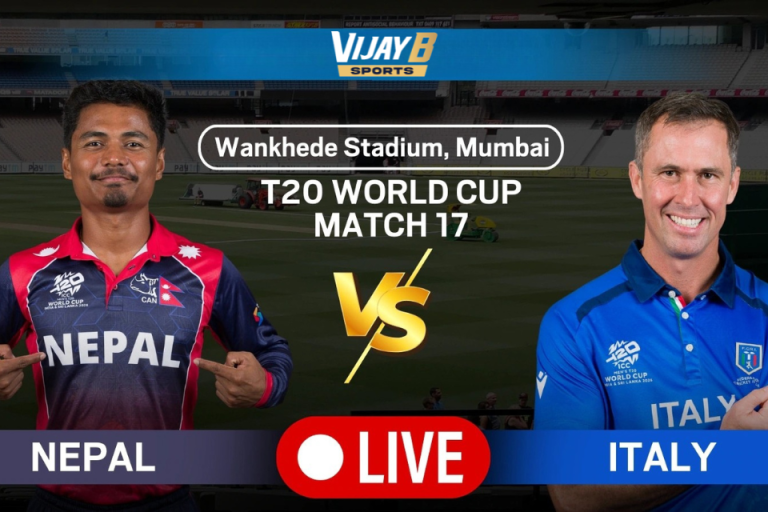
📌England, West Indies, Scotland, Nepal, Italy
Group C shows the widest contrast in playing styles. England and West Indies are former champions known for aggressive T20 cricket. Scotland’s inclusion—following Bangladesh’s withdrawal due to player safety concerns—adds a new dynamic. Nepal and Italy complete the group, reflecting the expanding global reach of the T20 format.
Group D: The Most Evenly Matched Group
📌New Zealand, South Africa, Afghanistan, Canada, United Arab Emirates
Group D is widely viewed as the most competitive overall. New Zealand and South Africa are consistently strong tournament teams, while Afghanistan’s T20 credentials are well established. Canada and the UAE, though underdogs, could still influence qualification by taking crucial points.
ICC Men’s T20 World Cup 2026: Confirmed Group Stage Table
Group structure is one of the most important elements of the T20 World Cup. With limited matches and high pressure, group composition directly shapes strategy and qualification paths.
Group Stage Line-up
| Group A | Group B | Group C | Group D |
| India (X1) | Australia (X2) | England (Y1) | New Zealand (Y2) |
| Pakistan (Y3) | Sri Lanka (Y4) | West Indies (X3) | South Africa (X4) |
| United States | Zimbabwe | Scotland* | Afghanistan |
| Netherlands | Ireland | Nepal | Canada |
| Namibia | Oman | Italy | United Arab Emirates |
* Scotland replaced Bangladesh in Group C. Bangladesh withdrew from the tournament citing player safety and travel risk concerns. The change was approved by the ICC in line with official tournament regulations.
Why Group Composition Matters in T20 Cricket
In T20 tournaments, group design is not just administrative—it directly affects how teams play.
With only a small number of group matches, one upset can force teams into difficult net run rate calculations and high-risk strategies. Balanced groups increase early intensity, while competitive associate teams ensure that favourites cannot rely on reputation alone.
Teams that handle early pressure effectively often gain a clear advantage heading into the Super 8 stage. For fans, understanding group structure helps explain why certain matches carry more weight than others.
Upcoming Matches to Watch: 9 February Fixtures
As the tournament continues, 9 February features three confirmed group-stage matches that are especially relevant for tracking form and momentum.
Oman vs Zimbabwe
- Venue: Colombo (SSC)
- Time: 03:00 PM
A key Group B contest where both teams will aim to avoid early pressure in the standings. Margins are expected to be tight.
Scotland vs Italy
- Venue: Kolkata
- Time: 11:00 AM
One of the most closely watched matches following Scotland’s late inclusion. This fixture offers Scotland a chance to justify their place on the world stage.
Canada vs South Africa
- Venue: Ahmedabad
- Time: 07:00 PM
South Africa enter as favourites, but T20 history has repeatedly shown that complacency can be costly. Focus and discipline will be key.
Key Dates to Keep in Mind as the Tournament Progresses
As the ICC Men’s T20 World Cup 2026 continues to unfold, the structure of the tournament becomes increasingly important. Each phase brings higher pressure, fewer margins for error, and greater consequences for every result.
Here are the key dates that define the remaining stages of the competition:
- Group Stage: Ongoing
- Super 8 Stage: Begins 22 February
- Semi-final 1: 4 March
- Semi-final 2: 5 March
- Final: 8 March
As the tournament moves forward, matches will carry significantly more weight. By the time teams reach the Super 8 stage, there is very little separating qualification from elimination. One loss, a poor net run rate, or a single tactical mistake can decide whether a team advances or exits the tournament.
For fans, keeping these dates in mind helps add context to every match result—especially as group-stage performances begin to directly influence knockout-stage scenarios.
Final Thoughts: Understanding the Tournament Beyond the Scorecard
The ICC Men’s T20 World Cup 2026 is not only about individual results. It is about how group structures amplify pressure, how momentum shifts rapidly, and how teams respond when there is no margin for recovery.
For fans, understanding group dynamics and upcoming fixtures provides a clearer picture of where the tournament is heading. Watching with context makes every match more meaningful—especially in a format where every over counts.
With matches coming thick and fast, platforms like vijaybsport help fans stay on top of schedules and key developments, making it easier to follow what truly matters as the tournament progresses.